early in the story
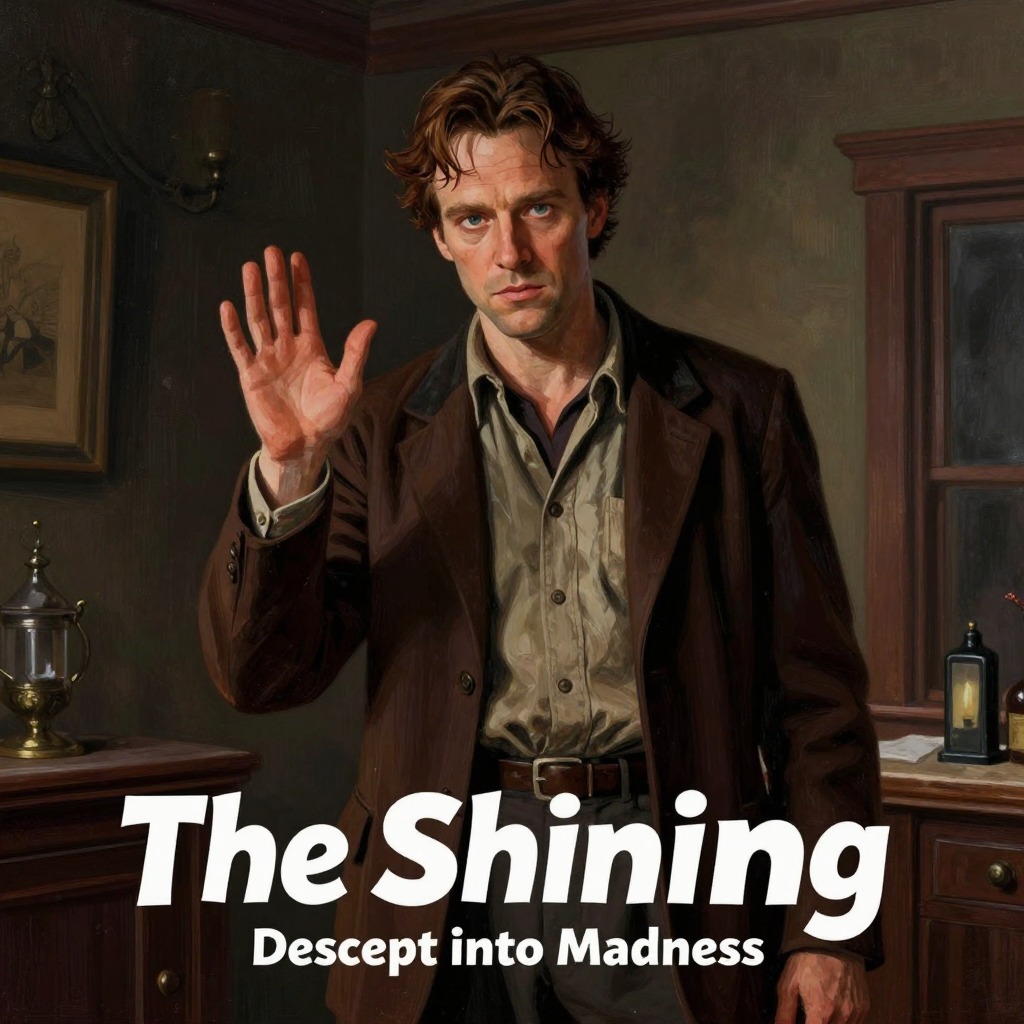
Jack Torrance's job interview
Jack Torrance, a struggling writer and recovering alcoholic, travels to the Overlook Hotel for a job interview with the manager, Stuart Ullman. Ullman is condescending and skeptical, questioning Jack's suitability for the winter caretaker position due to his past drinking and the violent incident that cost him his teaching job at Stovington Preparatory Academy. Jack, desperate for the job to support his wife Wendy and son Danny, endures Ullman's probing and defends his sobriety and qualifications. Ullman reluctantly hires him, revealing that the previous caretaker, Delbert Grady, murdered his family and himself during the winter of 1970-71. The interview establishes the hotel's ominous history and Jack's precarious mental state.
same day as the interview
Wendy and Danny wait in Boulder
In Boulder, Wendy Torrance worries about her husband's job interview and their precarious financial situation. She sits on the curb with her five-year-old son Danny, who is waiting for his father's return. Danny, who possesses a psychic ability he calls 'the shining,' senses his father's thoughts and emotions from a distance. Wendy reflects on Jack's temper and the incident where he broke Danny's arm, as well as the family's move from Vermont after Jack lost his teaching job for assaulting a student. The scene establishes the family's strained dynamics and Danny's unusual sensitivity.
after the interview
Jack tours the basement with Watson
After the interview, the maintenance man Watson gives Jack a tour of the Overlook's basement, focusing on the ancient boiler and furnace. Watson explains the boiler's dangerous tendency to 'creep' in pressure and the need for constant monitoring. He also shows Jack the piles of old newspapers and records stored in the basement, hinting at the hotel's scandalous past. Watson recounts the story of the Grady family murders and other deaths at the hotel, including a woman who died in Room 217. Jack is disturbed by the history but also fascinated, seeing potential material for a book.
while waiting for Jack in Boulder
Danny's vision of REDRUM
While waiting for his father on the curb, Danny slips into a trance and has a terrifying vision. He sees the Overlook Hotel in a blizzard, with a skull and crossbones sign. He hears a booming sound and a voice shouting 'Come out and take your medicine!' He sees a word spelled in green fire: REDRUM. The vision culminates in a scene of a bloody hand dangling over a bathtub and a monstrous figure with a mallet pursuing him through a dark hallway. Danny wakes up terrified, having wet himself, just as Jack returns. The vision foreshadows the horrors to come at the Overlook.
after the interview, in Boulder
Jack calls Al Shockley
Jack stops at a phone booth in Boulder to call his friend Al Shockley, who helped him get the caretaker job. He thanks Al and assures him he is staying sober. The conversation triggers Jack's memory of the night he and Al, both drunk, hit a child's bicycle with Al's Jaguar. They searched frantically but found no body, an event that haunted Jack and contributed to his decision to quit drinking. Jack also recalls the incident where he broke Danny's arm in a rage, and his subsequent struggle to stay sober. The call reinforces Jack's fragile sobriety and the guilt he carries.
night after the interview
Wendy's night thoughts
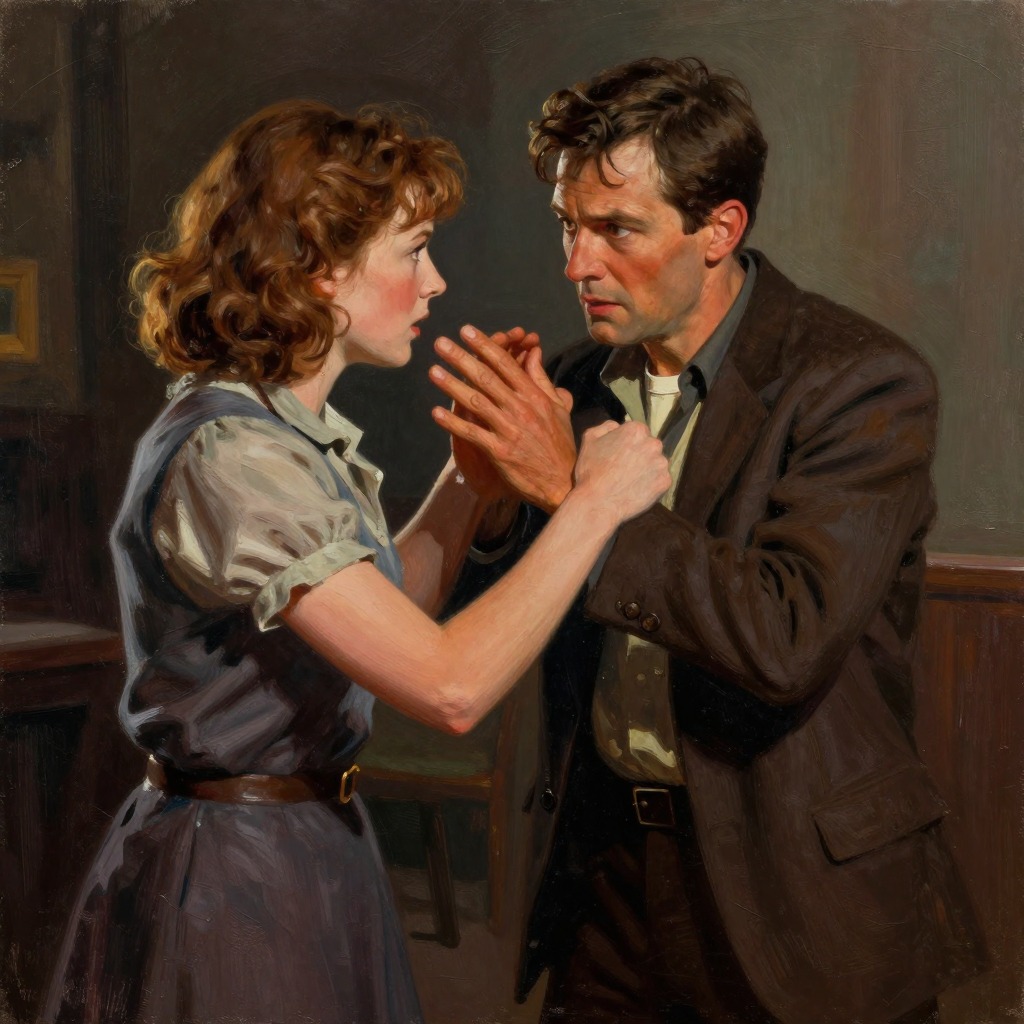
Wendy lies awake in bed, reflecting on her marriage to Jack. She remembers their early love, the birth of Danny, and the gradual deterioration of their relationship due to Jack's drinking and temper. She recalls the night Jack broke Danny's arm and her decision to ask for a divorce, which she postponed after Jack suddenly stopped drinking. Wendy also thinks about Danny's strange abilities and her own mother's critical influence. She feels a mixture of love, fear, and hope for their future at the Overlook.
same night
Danny's nightmare of the chase
Danny wakes from a nightmare in which he is chased through the Overlook's corridors by a monstrous figure wielding a roque mallet. The voice shouts 'Come out and take your medicine!' He hears the word REDRUM again. After the nightmare, he sees a shadow by the bus stop and hears Tony's voice warning him not to go. The experience deepens his dread of the Overlook, though he keeps it to himself.
closing day, late September
Torrance family arrives at the Overlook
Jack, Wendy, and Danny drive up to the Overlook Hotel on closing day. The journey is tense as the VW Beetle struggles up the mountain roads. At a scenic turnout, they see the hotel for the first time. Wendy is awestruck by its beauty, but Danny is terrified, recognizing it from his visions. He feels a sense of dread and isolation. The family's arrival marks the beginning of their isolation and the hotel's influence over them.
closing day
Checking in and meeting Hallorann
The Torrances are greeted by Stuart Ullman, who shows them around the bustling lobby. They meet Dick Hallorann, the head cook, who gives Wendy a tour of the vast kitchen and food supplies. Hallorann takes a special interest in Danny, sensing his psychic abilities. He tells Danny about 'the shining' and warns him to stay away from Room 217, where a bad thing happened. Hallorann's connection with Danny establishes a crucial bond and a potential lifeline.
closing day, in Hallorann's car
Danny and Hallorann discuss the shining
Hallorann takes Danny aside in his car and explains that they both possess 'the shining,' a psychic ability to read thoughts and see the past and future. Danny reveals his visions of the Overlook and his fear. Hallorann shares his own experiences, including a premonition of his brother's death. He tells Danny that the hotel is full of 'bad things' but that they are like pictures in a book and cannot hurt him. He promises to come if Danny ever calls for help. This conversation is a turning point, giving Danny a confidant and a potential rescuer.
closing day
The grand tour of the Overlook
Ullman gives the Torrances a tour of the hotel, showing them the Presidential Suite, the ballroom, and other rooms. Danny sees a vision of blood and brains on the wall of the Presidential Suite, a remnant of a gangland murder. He also feels uneasy about a fire extinguisher that seems to move. The tour ends at the family's quarters, which are modest but comfortable. The tour reinforces the hotel's grandeur and its hidden, sinister history.
closing day, evening
The family is left alone
After Ullman and the last staff leave, the Torrance family stands on the front porch, watching them go. They are now completely alone in the vast, empty hotel. The wind howls, and autumn leaves skitter across the lawn. The family feels a sense of isolation and foreboding. Jack tries to reassure them, but the moment marks the beginning of their true confinement.
October 20
Jack deals with wasps' nest
While reshingling the roof, Jack uncovers a large wasps' nest and is stung. He reflects on his past, including his alcoholism, his temper, and the incident with George Hatfield. He sees the wasps' nest as a symbol of the destructive forces in his life. He later uses a bug bomb to kill the wasps and gives the empty nest to Danny as a souvenir. The incident foreshadows the hotel's own 'stinging' influence.
evening after the wasp incident
Danny's bathroom trance
While brushing his teeth, Danny falls into a trance, locking the bathroom door. He mutters about 'roque' and 'redrum.' Jack breaks down the door and finds Danny staring blankly. When Danny comes to, he is confused and frightened. Jack, shaken, yells at Danny not to stutter. The incident reveals Danny's worsening psychic episodes and Jack's fraying temper.
later that night
Wasp attack on Danny
Danny wakes from a nightmare to find live wasps crawling on his hand. He is stung multiple times. Jack and Wendy rush to help, killing the wasps and treating his wounds. Jack is baffled because he thought he had killed all the wasps with the bug bomb. The incident deepens the family's unease and suggests that the hotel is somehow protecting or reviving the wasps.
the next day
Danny's visit to Dr. Edmonds
Wendy takes Danny to see Dr. Bill Edmonds in Sidewinder for a checkup after the wasp stings and his trances. Dr. Edmonds performs an EEG and interviews Danny, who reveals his 'invisible friend' Tony and his ability to know things. The doctor dismisses Danny's experiences as an overactive imagination and a reaction to family stress, but he is intrigued by Danny's intelligence. The visit provides a temporary, rational explanation for Danny's behavior.
November 1
Jack discovers the Overlook scrapbook
While exploring the basement, Jack discovers a scrapbook filled with newspaper clippings detailing the Overlook's sordid history: its construction, ownership by Horace Derwent, use as a Mafia key club, and a gangland murder. He becomes obsessed with the hotel's past, seeing it as material for a book. The discovery fuels his growing obsession and alienation from his family.
after Jack finds the scrapbook
Danny's encounter with the fire hose
Danny, drawn by curiosity, approaches Room 217 but stops. On his way back, a fire extinguisher hose falls from its hook, and Danny, terrified, imagines it is a snake chasing him. He runs away in panic. The incident shows the hotel's ability to manifest Danny's fears and his growing terror.
November 7
Jack confronts Ullman about hotel history
Jack calls Stuart Ullman in Florida and confronts him about the Overlook's hidden history, including its Mafia connections and use as a brothel. Ullman is furious and threatens to fire him. Jack also calls Al Shockley, who pressures him to drop his plans to write a book about the hotel. The confrontation strains Jack's relationships and fuels his resentment.
on the way to Sidewinder
Wendy and Danny discuss the Overlook
While driving to Sidewinder, Wendy asks Danny if he wants to leave the Overlook. Danny admits he is scared but says they cannot leave because it is his father's job. He reveals that he knows about Al Shockley's phone call and that his father is under strain. Wendy is shaken by Danny's insight and decides they will stay, but she becomes more determined to protect him.
day of the first big snow
Jack hallucinates the hedge animals moving
While trimming the topiary, Jack experiences a terrifying hallucination: the hedge animals seem to move, surrounding him and blocking his path. He closes his eyes, and when he opens them, they are still. The hallucination is a sign of his deteriorating mental state and the hotel's growing influence. He does not tell Wendy about it.
dusk, same day
The great snowstorm isolates the Overlook
A heavy snowstorm begins, quickly covering the roads and cutting off the Overlook from the outside world. The family watches from the porch as the snow falls, realizing they are now trapped for the winter. The isolation marks a turning point, as the hotel's influence intensifies.
a week and a half after the snowstorm
Danny enters Room 217
Despite Hallorann's warning, Danny uses the passkey to enter Room 217. In the bathroom, he finds the corpse of a woman in the bathtub. The woman sits up and reaches for him. Danny flees in terror, but the door is closed. He closes his eyes and tries to make her disappear, but she grabs him by the throat. He passes out. The encounter is Danny's most direct and traumatic confrontation with the hotel's evil.
same day as Danny's encounter
Jack's dream and the smashed CB radio
Jack falls asleep in the basement and has a nightmare about his abusive father. He sleepwalks to the office and smashes the CB radio, believing his father's voice is coming from it. Wendy finds him distraught. The incident shows Jack's psychological breakdown and cuts off their main communication link.
after Jack smashes the radio
Danny found catatonic
Wendy finds Danny standing at the top of the stairs, catatonic, with bruises on his neck. She assumes Jack attacked him and locks herself and Danny in the bedroom. Jack is horrified and denies responsibility. The incident creates a rift between Jack and Wendy and deepens the family's crisis.
later that day, in the kitchen
Danny reveals the truth about Room 217
After Danny recovers, the family gathers in the kitchen. Danny tells them about his encounter with the dead woman in Room 217, his visions, and his conversations with Hallorann. Jack and Wendy are forced to confront the reality of the hotel's supernatural evil. Jack goes to Room 217 to investigate but finds nothing, though he senses a presence.
after Danny's confession
Jack investigates Room 217
Jack goes to Room 217 to investigate Danny's story. He finds the room empty, but the shower curtain is drawn. He hears a sound and feels a presence. He flees in terror, locking the door behind him. The experience confirms the hotel's supernatural power and shakes Jack's sanity.
the next morning
Jack disables the snowmobile
Jack goes to the equipment shed to prepare the snowmobile for an escape. He finds it in working order but, in a moment of resentment and despair, he removes the magneto and throws it into the snow, sabotaging their only means of escape. He then lies to Wendy, saying the snowmobile is broken. This act seals their fate and shows Jack's alignment with the hotel.
November 29
Danny flees from the hedge animals
While playing in the snow, Danny is chased by the hedge animals, which have come to life. He runs for the hotel, and one of the lions scratches his leg. Jack and Wendy find him on the porch, terrified. The attack is a direct, physical manifestation of the hotel's malevolence.
after the hedge animal attack
Jack hits Danny
In the lobby, Jack interrogates Danny about the hedge animals, trying to convince him it was an hallucination. When Danny insists it was real, Jack slaps him. Wendy intervenes, and the family's unity fractures further. The incident shows Jack's growing instability and his rejection of the supernatural truth.
night of December 1
The Overlook elevator runs by itself
The family is awakened by the sound of the elevator running by itself. It moves up and down, and they hear sounds of a party. Wendy finds a party favor and a mask in the elevator, evidence of the hotel's supernatural activity. Jack tries to stop the elevator by using the emergency key. The event demonstrates the hotel's growing power and its ability to manifest its past.
December 2
Danny winds the clock in the ballroom
Danny goes to the ballroom and winds a clock under glass. The clock plays a waltz, and two mechanical figures perform a dance. Danny has a vision of the clock's hands pointing to midnight and the word REDRUM. He realizes the hotel is 'wound up' and that he is the key. He also tries to call Hallorann telepathically but is blocked by the hotel.
December 1, in Florida
Hallorann receives Danny's call
While driving in Florida, Dick Hallorann is hit by a powerful psychic call from Danny, screaming for help. He immediately decides to go to the Overlook. He makes a will, arranges time off from work, and flies to Denver. The call sets in motion the rescue attempt.
December 2
Hallorann's journey to the Overlook
Hallorann rents a car in Denver and drives toward the Overlook in a blizzard. He has several close calls and is blocked by the hotel's psychic influence, which tries to turn him back. He meets a snowplow driver who gives him mittens and advice. The journey is a harrowing test of his determination.
morning of December 2
Jack hallucinates drinking at the bar
Jack enters the Colorado Lounge and hallucinates that it is fully stocked and staffed. He has a conversation with an imaginary bartender named Lloyd and drinks imaginary martinis. He also hallucinates a costume party. The hallucination represents his surrender to the hotel's temptations and his relapse into alcoholism.
after the bar hallucination
Jack attacks Wendy with a roque mallet
Jack, now fully possessed by the hotel, attacks Wendy in the lobby with a roque mallet. He beats her severely, breaking her ribs. Wendy fights back, stabbing him in the back with a kitchen knife. Jack continues to pursue her, and she locks herself in the bathroom. The attack is the climax of the hotel's violence.
after the attack
Wendy locks Jack in the pantry
After stabbing Jack, Wendy and Danny drag his unconscious body to the pantry and lock him inside. Jack regains consciousness and rages, but they hold him captive. The act is a desperate attempt to contain the threat, but it is temporary.
later that day
Jack is freed from the pantry
The hotel, in the form of the ghost of Delbert Grady, frees Jack from the pantry. Grady convinces Jack that he must kill his wife and son to prove his loyalty to the hotel. Jack takes a roque mallet and goes to find them. The release marks Jack's complete subjugation to the hotel's will.
night of December 2
Hallorann battles the hedge lion
As Hallorann approaches the Overlook on a snowmobile, he is attacked by a hedge lion that has come to life. He fights it off by setting it on fire with gasoline from his snowmobile. The battle is a physical and psychic struggle, and Hallorann is badly injured. He finally reaches the hotel.
after Hallorann enters the hotel
Jack knocks out Hallorann
Hallorann enters the lobby and calls for Danny. Jack ambushes him from behind and knocks him unconscious with the roque mallet. Jack then goes to find Danny. The attack seems to eliminate the last hope for rescue.
after Hallorann is knocked out
Danny confronts Jack on the third floor
Jack pursues Danny to the third floor. Danny confronts him, telling him that he is not his real father but a 'false face' controlled by the hotel. Jack hesitates, and for a moment, his true self breaks through, telling Danny to run. Danny refuses and tells Jack that the hotel lies. The confrontation is the emotional climax of the story.
during the confrontation
Danny tricks Jack about the boiler
Danny realizes that Jack has forgotten to check the boiler, which is about to explode. He screams that the boiler is going to blow. The possessed Jack, terrified of losing the hotel, runs to the basement to try to save it. Danny's trick gives him and his mother a chance to escape.
after Jack runs to the basement
Overlook Hotel boiler explosion
Jack reaches the boiler and tries to dump the pressure, but it is too late. The boiler explodes, destroying the Overlook Hotel. Jack is killed in the explosion. The hotel's evil is seemingly destroyed in the conflagration.
after the explosion
Rescue of the Torrances
Hallorann, Wendy, and Danny escape the burning hotel on the snowmobile. They are met by a rescue party led by Dr. Edmonds. The family is saved, and the long nightmare is over. The rescue marks the end of the ordeal.
the following summer
Epilogue: Summer at Red Arrow Lodge
Months later, Hallorann is working as a cook at the Red Arrow Lodge in Maine. Wendy and Danny are staying there, recovering from their ordeal. Wendy has a back brace and is planning to start a new job in Maryland. Danny is still haunted by nightmares but is healing. Hallorann and Danny have a heartfelt conversation on a dock, where Danny cries for his father and Hallorann comforts him, telling him to keep his love alive and go on. The epilogue provides a sense of closure and hope for the future.